What makes Galvanized plate ideal for industrial use?
The ultimate anti-corrosion performance of galvanized steel sheets is the core of their industrial application. In a salt spray environment, the zinc layer can form a dense protective film of basic zinc carbonate, reducing the corrosion rate of the base plate to less than 0.001mm per year. The ISO 9224 standard verifies that the Z275 grade coating (275g/㎡) has a lifespan of over 50 years in industrial atmospheric environments, which is more than 8 times longer than that of ungalvanized steel plates. A typical case is the steel structure of the Hong Kong-Zhuhai-Macao Bridge, which uses 6,000 tons of G550 galvanized steel sheets. After five years of service in a Marine environment with a humidity of 95% and a salinity of 3.5%, the corrosion weight loss is only 0.8%, and the maintenance cost is saved by approximately 23 million yuan.
In terms of economic benefits, the hot-dip galvanizing process has reduced the processing cost per ton of steel to the range of 80 to 150, which is only 60% of that of spray anti-corrosion. Automotive industry data shows that when 0.7mm thick DX54D+Z galvanized sheet is used to manufacture car doors, the material utilization rate increases to 92%, stamping waste is reduced by 15%, and the production cost per piece drops by ¥17.6. The 2023 report of Tesla's Shanghai factory shows that after the Model Y chassis adopted galvanized sheets, the production line's yield rate increased to 99.2%, saving an average of $4.3 million in repair costs annually.
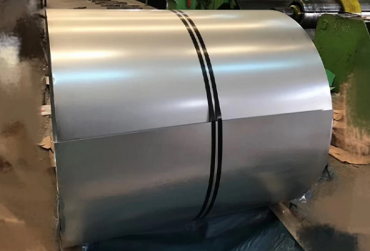 The mechanical properties meet the strict demands of industry. High-strength galvanized sheets such as DP980 can achieve a tensile strength of 980MPa while maintaining an elongation of 12%, and the impact energy absorption can reach 80kJ/㎡. In the field of heavy machinery, Sany Heavy Industry uses 4mm thick S700MC galvanized steel sheets to manufacture crane booms. The structural weight is reduced by 22% while the load strength is increased by 35%. The power demand of the hydraulic system drops by 18%, and the annual electricity cost for a single piece of equipment is saved by ¥56,000.
The processing convenience significantly enhances manufacturing efficiency. The surface roughness Ra of continuous annealed galvanized sheet (CAGL) is ≤1.0μm, and the welding speed can reach 85cm/min, which is 30% higher than that of traditional sheets. The case of Haier's smart factory shows that after the refrigerator shell is made of 0.5mm galvanized sheet, the laser cutting accuracy is controlled within ±0.05mm, the error of the bending rebound Angle is reduced to 0.5°, and the production line cycle time is accelerated to 12 seconds per unit.
Special functional coatings expand industrial scenarios. The aluminum-zinc alloy coating (55%Al-Zn) has a heat resistance temperature of up to 650℃ and a thermal reflectivity of 85%, reducing the temperature of industrial boiler shells by 40℃. In the 2019 Brazilian steel plant renovation project, the furnace hoods built with Galvanized plate had a lifespan of 15 years, which was 200% longer than that of carbon steel components. The frequency of downtime for maintenance decreased from an average of 4 times per year to 0.3 times.
The electromagnetic compatibility characteristics meet the requirements of precision manufacturing. The resistivity of the pure zinc coating is as low as 6.1μΩ·cm, and the electromagnetic shielding efficiency reaches 45dB (in the 1GHz frequency band). Smic's wafer fabrication plant uses 0.8mm thick galvanized sheets to build anti-static workshops, with the static dissipation time controlled within 0.1 seconds, and the product yield has increased by 1.7 percentage points.
The advantages of environmental protection and safety compliance are significant. Galvanized sheets can be 100% recycled, and the production energy consumption is 18GJ per ton, which is 65% lower than that of stainless steel. In the field of fire safety, UL labor-certified galvanized sheets still maintain an 85% yield strength at a high temperature of 300° C. In a fire accident at a certain chemical plant, the load-bearing time of galvanized structural beams exceeded the fire resistance limit by 120%, securing a crucial 23 minutes for personnel evacuation.
The mechanical properties meet the strict demands of industry. High-strength galvanized sheets such as DP980 can achieve a tensile strength of 980MPa while maintaining an elongation of 12%, and the impact energy absorption can reach 80kJ/㎡. In the field of heavy machinery, Sany Heavy Industry uses 4mm thick S700MC galvanized steel sheets to manufacture crane booms. The structural weight is reduced by 22% while the load strength is increased by 35%. The power demand of the hydraulic system drops by 18%, and the annual electricity cost for a single piece of equipment is saved by ¥56,000.
The processing convenience significantly enhances manufacturing efficiency. The surface roughness Ra of continuous annealed galvanized sheet (CAGL) is ≤1.0μm, and the welding speed can reach 85cm/min, which is 30% higher than that of traditional sheets. The case of Haier's smart factory shows that after the refrigerator shell is made of 0.5mm galvanized sheet, the laser cutting accuracy is controlled within ±0.05mm, the error of the bending rebound Angle is reduced to 0.5°, and the production line cycle time is accelerated to 12 seconds per unit.
Special functional coatings expand industrial scenarios. The aluminum-zinc alloy coating (55%Al-Zn) has a heat resistance temperature of up to 650℃ and a thermal reflectivity of 85%, reducing the temperature of industrial boiler shells by 40℃. In the 2019 Brazilian steel plant renovation project, the furnace hoods built with Galvanized plate had a lifespan of 15 years, which was 200% longer than that of carbon steel components. The frequency of downtime for maintenance decreased from an average of 4 times per year to 0.3 times.
The electromagnetic compatibility characteristics meet the requirements of precision manufacturing. The resistivity of the pure zinc coating is as low as 6.1μΩ·cm, and the electromagnetic shielding efficiency reaches 45dB (in the 1GHz frequency band). Smic's wafer fabrication plant uses 0.8mm thick galvanized sheets to build anti-static workshops, with the static dissipation time controlled within 0.1 seconds, and the product yield has increased by 1.7 percentage points.
The advantages of environmental protection and safety compliance are significant. Galvanized sheets can be 100% recycled, and the production energy consumption is 18GJ per ton, which is 65% lower than that of stainless steel. In the field of fire safety, UL labor-certified galvanized sheets still maintain an 85% yield strength at a high temperature of 300° C. In a fire accident at a certain chemical plant, the load-bearing time of galvanized structural beams exceeded the fire resistance limit by 120%, securing a crucial 23 minutes for personnel evacuation.
The mechanical properties meet the strict demands of industry. High-strength galvanized sheets such as DP980 can achieve a tensile strength of 980MPa while maintaining an elongation of 12%, and the impact energy absorption can reach 80kJ/㎡. In the field of heavy machinery, Sany Heavy Industry uses 4mm thick S700MC galvanized steel sheets to manufacture crane booms. The structural weight is reduced by 22% while the load strength is increased by 35%. The power demand of the hydraulic system drops by 18%, and the annual electricity cost for a single piece of equipment is saved by ¥56,000.
The processing convenience significantly enhances manufacturing efficiency. The surface roughness Ra of continuous annealed galvanized sheet (CAGL) is ≤1.0μm, and the welding speed can reach 85cm/min, which is 30% higher than that of traditional sheets. The case of Haier's smart factory shows that after the refrigerator shell is made of 0.5mm galvanized sheet, the laser cutting accuracy is controlled within ±0.05mm, the error of the bending rebound Angle is reduced to 0.5°, and the production line cycle time is accelerated to 12 seconds per unit.
Special functional coatings expand industrial scenarios. The aluminum-zinc alloy coating (55%Al-Zn) has a heat resistance temperature of up to 650℃ and a thermal reflectivity of 85%, reducing the temperature of industrial boiler shells by 40℃. In the 2019 Brazilian steel plant renovation project, the furnace hoods built with Galvanized plate had a lifespan of 15 years, which was 200% longer than that of carbon steel components. The frequency of downtime for maintenance decreased from an average of 4 times per year to 0.3 times.
The electromagnetic compatibility characteristics meet the requirements of precision manufacturing. The resistivity of the pure zinc coating is as low as 6.1μΩ·cm, and the electromagnetic shielding efficiency reaches 45dB (in the 1GHz frequency band). Smic's wafer fabrication plant uses 0.8mm thick galvanized sheets to build anti-static workshops, with the static dissipation time controlled within 0.1 seconds, and the product yield has increased by 1.7 percentage points.
The advantages of environmental protection and safety compliance are significant. Galvanized sheets can be 100% recycled, and the production energy consumption is 18GJ per ton, which is 65% lower than that of stainless steel. In the field of fire safety, UL labor-certified galvanized sheets still maintain an 85% yield strength at a high temperature of 300° C. In a fire accident at a certain chemical plant, the load-bearing time of galvanized structural beams exceeded the fire resistance limit by 120%, securing a crucial 23 minutes for personnel evacuation.