Why is primary antibody selection critical in immunohistochemistry?
In immunohistochemical experiments, the selection of primary antibody directly affects the accuracy and repeatability of the results. Studies have shown that the use of highly non-specific antibodies may lead to up to 70% false negative or false positive results, seriously interfering with the reliability of pathological diagnosis. For instance, in the detection of tumor markers, if CD20 antibodies with strong cross-reactivity are selected, normal B cells may be mistakenly labeled as lymphoma cells, increasing the probability of misdiagnosis by approximately 25%. Therefore, the specificity of the primary antibody needs to be verified through Western blotting or peptide blocking experiments. Its binding affinity (KD value) should be lower than 10 nM to ensure efficient binding to the target antigen.
From the perspective of cost efficiency, an incorrect selection of primary antibody may lead to the repetition of the entire experimental process, increasing the cost of a single test by $300 to $500. According to industry statistics, approximately 30% of the laboratory's budget is wasted on antibody validation and repeated experiments. In 2018, the journal Nature disclosed that the global scientific research suffered an annual loss of over 800 million US dollars due to insufficient antibody specificity. If a clinically validated primary antibody (such as the ER detection antibody produced by DAKO) is selected, the detection consistency can reach 98%, significantly reducing the retest rate and shortening the diagnosis cycle (by an average of 3 to 5 working days).
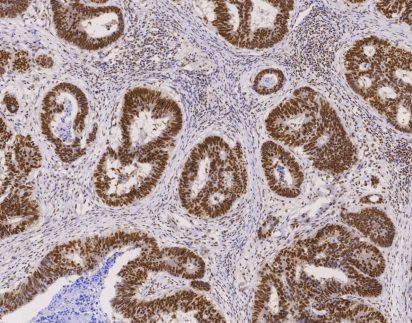 The optimization of the experimental process also depends on the performance of primary antibody. High-throughput laboratory data show that highly sensitive antibodies (such as signal amplification monoclonal antibodies) can reduce the antigen detection limit from 50 cells per square millimeter to 5 cells, while reducing the concentration of primary antibodies used (from 1:100 dilution to 1:1000), and extending the usage period of a single bottle of antibodies by three times. Roche Diagnostics' BenchMark series platform has compressed the overall detection process to 2.5 hours by optimizing the primary antibody incubation parameter (37 ° C ×32 minutes instead of room temperature ×60 minutes), increasing efficiency by 40%.
In the field of clinical diagnosis, the accuracy of primary antibody is directly related to treatment decisions. For example, in HER2 breast cancer detection, the use of the FDA-approved HercepTest™ kit (containing specific primary antibody) can increase the coincidence rate of the test with FISH results to over 95%, while the coincidence rate of unverified antibodies is only 70%-80%. In 2021, the American College of Pathologists reported that standardized primary antibody selection reduced the error rate of breast cancer immunohistochemical detection from 12% to 4.5%, avoiding approximately tens of thousands of incorrect treatment plans each year.
Current technological advancements are driving the development of primary antibody towards recombinant antibody technology. Thermo Fisher's Recombinant Rabbit Monoclonal antibody has a batch-to-batch coefficient of variation of less than 5%, which is far superior to traditional polyclonal antibodies (with a coefficient of variation of 15%-20%). The usage rate of this type of antibody on automated staining platforms has reached 60%, and its thermal stability (able to withstand transportation at 25℃) and shelf life (extended to 36 months) significantly reduce supply chain risks. With the emergence of artificial intelligence-assisted antibody design platforms, the development cycle of primary antibody has been shortened from 18 months to 6 months, accelerating the development process of precision medicine.
The optimization of the experimental process also depends on the performance of primary antibody. High-throughput laboratory data show that highly sensitive antibodies (such as signal amplification monoclonal antibodies) can reduce the antigen detection limit from 50 cells per square millimeter to 5 cells, while reducing the concentration of primary antibodies used (from 1:100 dilution to 1:1000), and extending the usage period of a single bottle of antibodies by three times. Roche Diagnostics' BenchMark series platform has compressed the overall detection process to 2.5 hours by optimizing the primary antibody incubation parameter (37 ° C ×32 minutes instead of room temperature ×60 minutes), increasing efficiency by 40%.
In the field of clinical diagnosis, the accuracy of primary antibody is directly related to treatment decisions. For example, in HER2 breast cancer detection, the use of the FDA-approved HercepTest™ kit (containing specific primary antibody) can increase the coincidence rate of the test with FISH results to over 95%, while the coincidence rate of unverified antibodies is only 70%-80%. In 2021, the American College of Pathologists reported that standardized primary antibody selection reduced the error rate of breast cancer immunohistochemical detection from 12% to 4.5%, avoiding approximately tens of thousands of incorrect treatment plans each year.
Current technological advancements are driving the development of primary antibody towards recombinant antibody technology. Thermo Fisher's Recombinant Rabbit Monoclonal antibody has a batch-to-batch coefficient of variation of less than 5%, which is far superior to traditional polyclonal antibodies (with a coefficient of variation of 15%-20%). The usage rate of this type of antibody on automated staining platforms has reached 60%, and its thermal stability (able to withstand transportation at 25℃) and shelf life (extended to 36 months) significantly reduce supply chain risks. With the emergence of artificial intelligence-assisted antibody design platforms, the development cycle of primary antibody has been shortened from 18 months to 6 months, accelerating the development process of precision medicine.
The optimization of the experimental process also depends on the performance of primary antibody. High-throughput laboratory data show that highly sensitive antibodies (such as signal amplification monoclonal antibodies) can reduce the antigen detection limit from 50 cells per square millimeter to 5 cells, while reducing the concentration of primary antibodies used (from 1:100 dilution to 1:1000), and extending the usage period of a single bottle of antibodies by three times. Roche Diagnostics' BenchMark series platform has compressed the overall detection process to 2.5 hours by optimizing the primary antibody incubation parameter (37 ° C ×32 minutes instead of room temperature ×60 minutes), increasing efficiency by 40%.
In the field of clinical diagnosis, the accuracy of primary antibody is directly related to treatment decisions. For example, in HER2 breast cancer detection, the use of the FDA-approved HercepTest™ kit (containing specific primary antibody) can increase the coincidence rate of the test with FISH results to over 95%, while the coincidence rate of unverified antibodies is only 70%-80%. In 2021, the American College of Pathologists reported that standardized primary antibody selection reduced the error rate of breast cancer immunohistochemical detection from 12% to 4.5%, avoiding approximately tens of thousands of incorrect treatment plans each year.
Current technological advancements are driving the development of primary antibody towards recombinant antibody technology. Thermo Fisher's Recombinant Rabbit Monoclonal antibody has a batch-to-batch coefficient of variation of less than 5%, which is far superior to traditional polyclonal antibodies (with a coefficient of variation of 15%-20%). The usage rate of this type of antibody on automated staining platforms has reached 60%, and its thermal stability (able to withstand transportation at 25℃) and shelf life (extended to 36 months) significantly reduce supply chain risks. With the emergence of artificial intelligence-assisted antibody design platforms, the development cycle of primary antibody has been shortened from 18 months to 6 months, accelerating the development process of precision medicine.